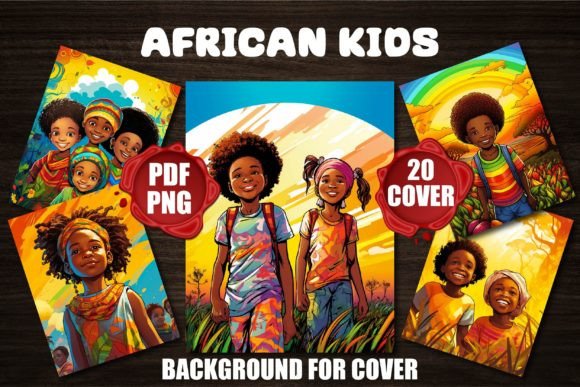
Unlock Vibrant Stories: African Kids Backgrounds for Covers
There is a specific energy that radiates from designs rooted in cultural heritage. It’s a blend of storytelling, color theory, and emotional resonance that generic stock assets rarely achieve. As creatives, we often search for that distinct visual voice that can cut through the noise of a saturated market. This is where the African Kids Backgrounds for Covers collection steps in, offering more than just images—it provides a narrative framework.
This collection is not about static decoration. It is about capturing the spirit of youth, the vibrancy of African landscapes, and the intricate beauty of traditional patterns, all while maintaining a professional standard for commercial use. Whether you are designing a book cover, building a brand identity, or crafting digital products, understanding how to leverage these assets is key to maximizing their impact.
The Visual Character: More Than Just Patterns
When we talk about the visual personality of the African Kids Backgrounds for Covers, we are looking at a synthesis of warm earth tones and high-saturation accents. The aesthetic relies heavily on the interplay between organic textures—implied through the illustration style—and the geometric precision often found in African textiles like Kente or Ankara.
For a designer, this presents a unique challenge and opportunity. Unlike a minimalist sans serif font that demands whitespace, these backgrounds are rich with detail. They possess a "busy" elegance. The visual hierarchy here is established through contrast. If you overlay text, it must command attention. A bold, heavy-weight typeface or a clean, modern sans serif usually works best against such intricate backdrops. The goal is to ensure that the background supports the message without overwhelming it. The "personality" of these assets is celebratory and warm, making them ideal for projects that aim to evoke joy, nostalgia, or community.
Strategic Applications: Where Heritage Meets Modern Design
The versatility of this bundle extends far beyond the obvious application of coloring books. While they are perfect for KDP (Kindle Direct Publishing) interiors and covers, their utility in broader branding contexts is significant.
Publishing and Editorial Design
In the realm of editorial design, these backgrounds can serve as chapter dividers or full-bleed cover art for memoirs, children’s literature, or travel journals. The 300 DPI resolution ensures that the line art remains crisp, which is non-negotiable for print quality. For Amazon Kindle Direct Publishing, using a distinct background like this helps with "shelf appeal." It immediately signals to the reader the genre and tone of the book before they even read the title.
Digital Marketing and Brand Identity
For entrepreneurs and marketers, consistency is king. Using these backgrounds in social media graphics creates a cohesive visual thread. Imagine a series of Instagram posts or Pinterest pins where the background texture remains consistent, but the foreground content changes. This builds brand recognition. For businesses focusing on education, wellness, or cultural products, these assets ground the brand in authenticity. They work exceptionally well for headers on websites or as texture overlays in video content.
Product Design and Merchandise
Don't limit your thinking to flat digital media. These designs translate beautifully onto physical goods. Think about packaging design for artisanal goods, tote bags, or even stationery. The "massive bundle" nature of the download means you have enough variety to create a product line rather than a single item. The intricate details make for high-quality prints on fabric and paper alike.
Design Mechanics: Readability and Hierarchy
One of the most common pitfalls when working with detailed backgrounds is sacrificing readability. The African Kids Backgrounds for Covers are designed with "coloring" in mind, meaning they feature distinct outlines. However, when applying text, you must manage the visual weight.
Consider using a "knockout" effect or a semi-transparent overlay to separate your typography from the background texture. This creates a middle ground where the background is visible but doesn't compete with the message. In terms of font pairing, avoid overly ornate script fonts that might get lost in the details. Instead, opt for strong, geometric sans serif fonts or bold serif fonts. The contrast between the organic, cultural patterns and a rigid, modern typeface often creates a striking, professional tension that draws the eye.
Practical Guidance for Implementation
To get the most out of this collection, you need to approach it with a strategic mindset. Here is how to integrate these assets effectively:
- Evaluate the Context: Before selecting a specific background, define the project's goal. Is it for stress relief (like a coloring book) or for brand identity? The former allows for full vibrancy; the latter might require desaturation or cropping to fit a specific color palette.
- Master the Pairing: Treat the background as a primary design element. If the background is the "hero," keep other design elements minimal. Test your text overlays in black and white first to ensure legibility before adding color.
- Utilize the PNG Format: Since these are provided as PNG files, they likely have transparency or can be easily masked. Use this to your advantage in graphic design software. Layer these backgrounds with other textures or photos to create unique composites.
- Check Licensing for Commercial Use: Always verify the license. For commercial projects like selling printed planners or using them in client work, ensure the asset license covers these specific use cases. This protects your business and ensures professional integrity.
The Cultural Connection
Ultimately, the value of the African Kids Backgrounds for Covers lies in their ability to tell a story. In a digital world that can often feel sterile and homogenized, these designs bring warmth and humanity. They are not just "assets"; they are conversation starters. For the creative professional, they offer a way to inject soul into a project, transforming a standard layout into an immersive experience. By respecting the visual complexity and applying sound design principles, you can unlock a creative potential that resonates deeply with your audience.