Overgrown Wall Stone Moss Backgrounds: A Designer's Guide to Rustic Charm
There’s a certain poetry in decay. The way moss claims a stone wall, the gentle erosion that softens sharp edges, the earthy palette that emerges from weathering—these aren't flaws. They're stories. As designers and creators, we're often chasing that perfect balance between polish and authenticity, between the manufactured and the organic. That’s precisely where the Overgrown Wall Stone Moss Backgrounds collection finds its voice. It’s not just a set of textures; it’s a toolkit for injecting narrative, history, and a deeply tactile quality into your digital and physical projects.
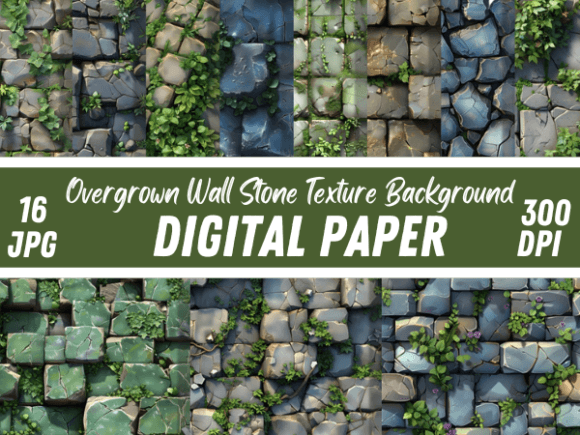
This bundle offers 16 high-resolution, seamless digital papers at 300 DPI, capturing everything from the subtle, gritty texture of rough-hewn stone to the velvety, intricate patterns of moss and ivy. The personality here is unmistakable: it’s weathered, neglected, wild, and inherently romantic. Think of the crumbling facade of an abandoned European cottage, the ancient wall of a forgotten garden, or the surface of a time-worn artifact. The appeal is in its imperfection—its ability to convey age, resilience, and a connection to the natural world. For a designer, this translates into a powerful visual shorthand for authenticity, rustic elegance, and a touch of grungy realism.
Where This Texture Truly Shines: From Branding to Handcraft
The versatility of a texture like this is one of its greatest strengths. It’s not a niche asset; it’s a foundational design element that can be adapted across an astonishing range of applications. Let’s move beyond the obvious and look at where these backgrounds can solve real creative problems.
In branding and packaging design, these textures are gold. Imagine using a subtle, mossy stone pattern as the background for a logo mark for a craft brewery, an artisan coffee roaster, or a boutique skincare line using natural ingredients. It immediately communicates earthiness, tradition, and small-batch quality. For product packaging, especially on labels or wrapping paper for gifts, it adds a layer of luxury and tactile interest that plain paper or digital print can’t achieve. It’s a premium font for the eyes—conveying depth and quality before a word is read.
For editorial and publishing projects, think book covers for historical fiction, fantasy novels, or nature guides. The texture can set the entire mood. A weathered stone background paired with a classic serif font creates immediate gravitas. It’s equally effective for magazine layouts, scrapbook elements, or as a backdrop for quote graphics on social media, where it helps content stand out in a fast-scrolling feed. The high detail makes it perfect for large-format applications like wall art or event backdrops, ensuring it remains crisp and impactful even at 12x12 inches or larger.
Then there’s the world of personal craft and physical goods. This is where the "printable" aspect becomes crucial. The seamless repeatable pattern is designed for practical use. Crafters can use it for digital scrapbooking, creating unique junk journal pages, or designing planner inserts. Entrepreneurs can apply it to printable products like greeting cards, wedding stationery, or anniversary invitations that need a touch of rustic romance. For sublimation and print-on-demand businesses, it opens doors for tumbler wraps, tote bag printing, mug designs, and even custom fabric for clothing or home decor. The pattern’s repeatable nature ensures flawless application on any scale.
Making the Texture Work for You: Practical Application Tips
Having a beautiful asset is one thing; using it effectively is another. Here’s how to integrate the Overgrown Wall Stone Moss Backgrounds into your workflow with intention.
Evaluate for Fit and Mood. Not every project calls for this level of texture. It’s ideal for brands, products, or personal projects that want to evoke: Rustic & Natural, Vintage & Aged, Romantic & Whimsical, Earthy & Organic, or Grungy & Edgy. If your brand identity is sleek, minimalist, and ultra-modern, this might clash. But if you’re aiming for warmth, history, or a touch of wildness, it’s a perfect match.
Master Font Pairing and Contrast. A textured background demands careful typographic pairing. To ensure readability and create a strong visual hierarchy, pair it with clean, simple typefaces. A crisp sans-serif font for body text or a bold, straightforward display font for headlines will pop against the detailed background. Avoid overly ornate or script fonts for primary text, as they can get lost in the texture. Use the mossy stone as a supporting actor, not the lead, letting your typography remain the star. This is where understanding font pairing as a dialogue between elements is key.
Leverage Color and Layering. The bundle’s pastel and natural color palette is a starting point. In your design software, don’t be afraid to adjust the hue, saturation, or brightness to better match your project’s color scheme. You can also layer these textures subtly. Try using a stone pattern at 30% opacity over a solid color block to add depth without overwhelming the content. For digital projects, consider using a darker, moodier version for a hero section and a lighter, more mossy version for secondary areas to guide the user’s eye.
Understand the Technical Specs. The 300 DPI resolution and JPG format are industry standards for print-ready quality. This ensures your designs will look sharp on physical products like mugs, cards, and fabric. However, always do a test print on your specific material, as screen colors (RGB) and print colors (CMYK) can vary. For digital use like websites or social media, you may need to optimize the file size for faster loading without sacrificing too much detail.
Ultimately, the Overgrown Wall Stone Moss Backgrounds bundle is more than just a set of files. It’s a creative catalyst. It provides the visual foundation for projects that need to feel grounded, authentic, and rich with unspoken history. By understanding its personality and applying it thoughtfully, you can transform a simple design into something that feels discovered, weathered, and genuinely compelling. It’s a tool for telling better visual stories.